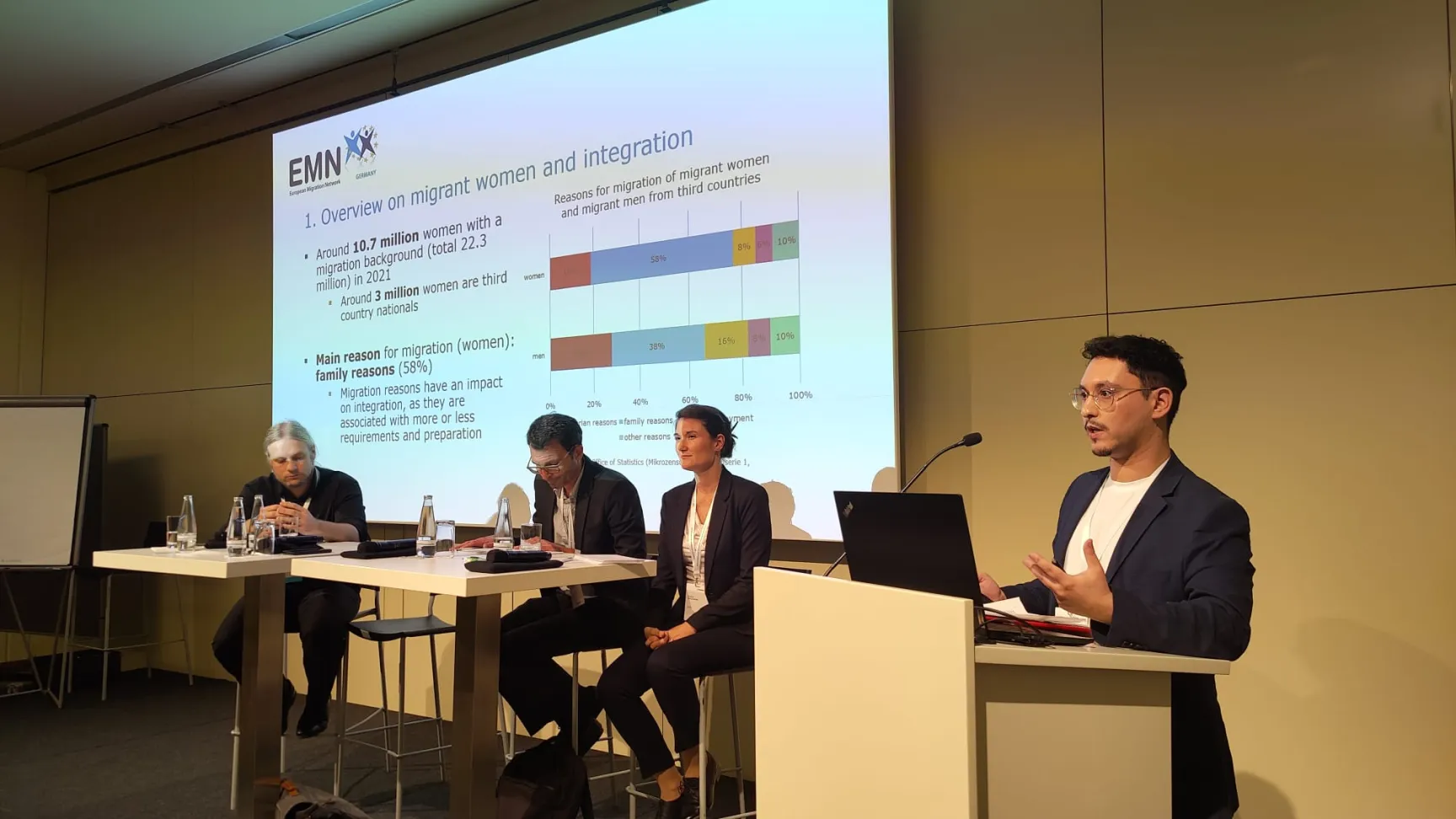
Gender plays a role in all migration processes, including integration. Concepts such as “double discrimination” or “intersectionality” are used to understand how gender and other personal characteristics intersect and give rise to specific challenges. For states to be able to create fair conditions, gender must be taken into account. The European Commission’s Action Plan on Integration and Inclusion (2021–2027) calls on Member States to take gender issues into account. At the same time, the EU Gender Equality Strategy 2020–2025 emphasises the importance of a gender-sensitive approach across various policy areas. But do Member States take the specific situation of migrant women into account in their integration policies, and why or why not?
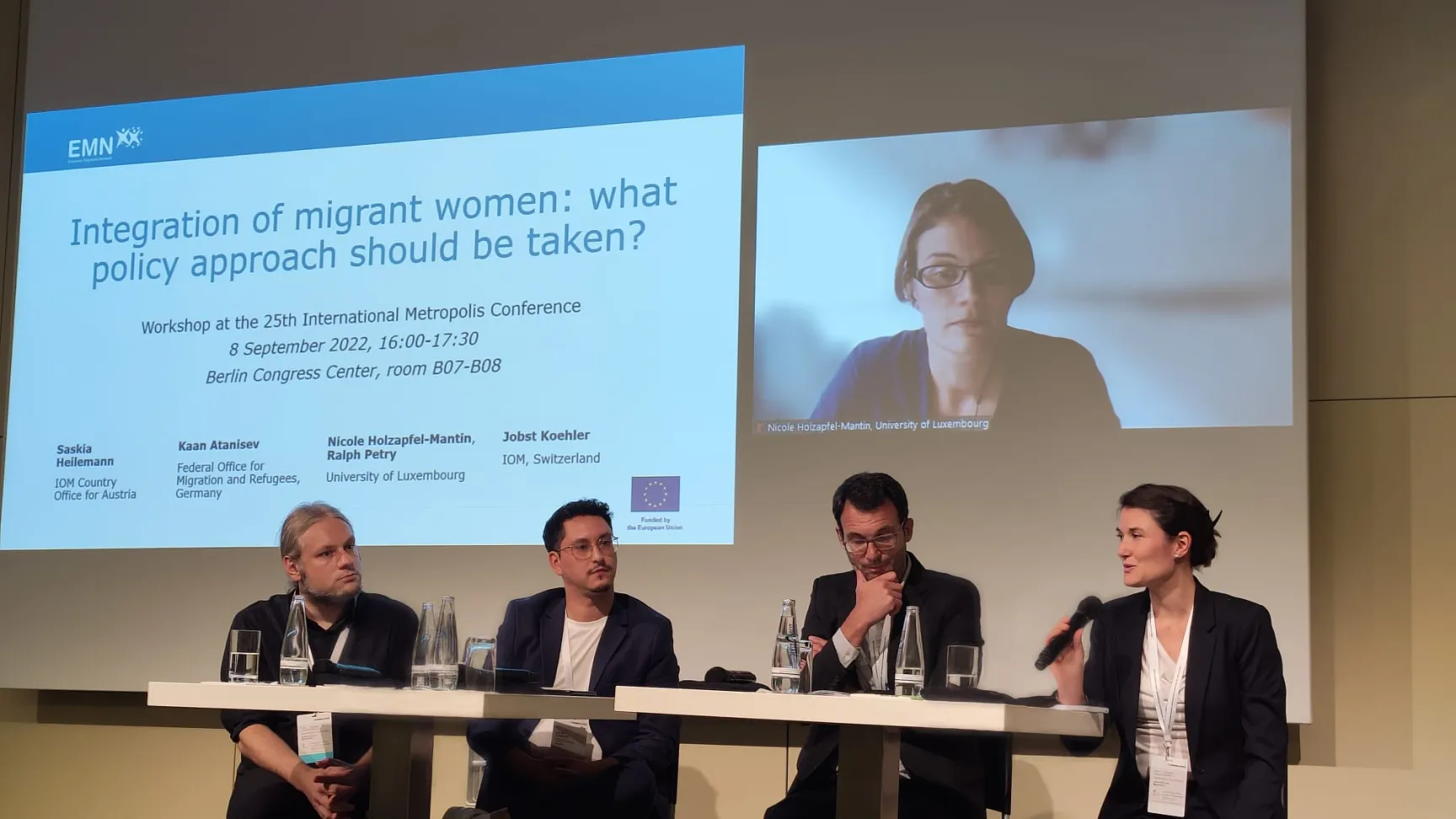
A comparative study on the integration of migrant women, carried out by the European Migration Network (EMN) in 2021, found that, out of 23 Member States, 15 implement gender mainstreaming in their national integration policies, with eight of these adopting a dual approach (i.e. combining gender mainstreaming with targeted measures). Based on this study, the workshop presented case studies from three different EU Member States (Austria, Germany and Luxembourg) and compared the policy approaches to the integration of migrant women.
Speakers:
Kaan Atanisev, Federal Office for Migration and Refugees/EMN Germany
Ralph Petry and Nicole Holzapfel-Mantin, University of Luxembourg/EMN Luxembourg
Saskia Heilemann, International Organisation for Migration (IOM), National Office for Austria/EMN Austria
Discussant:
Jobst Köhler, International Organisation for Migration (IOM)
Further information on the event can be found here.